
 Introduction
The UK’s First Hybrid Freight Locomotive Enters Commercial Service
Article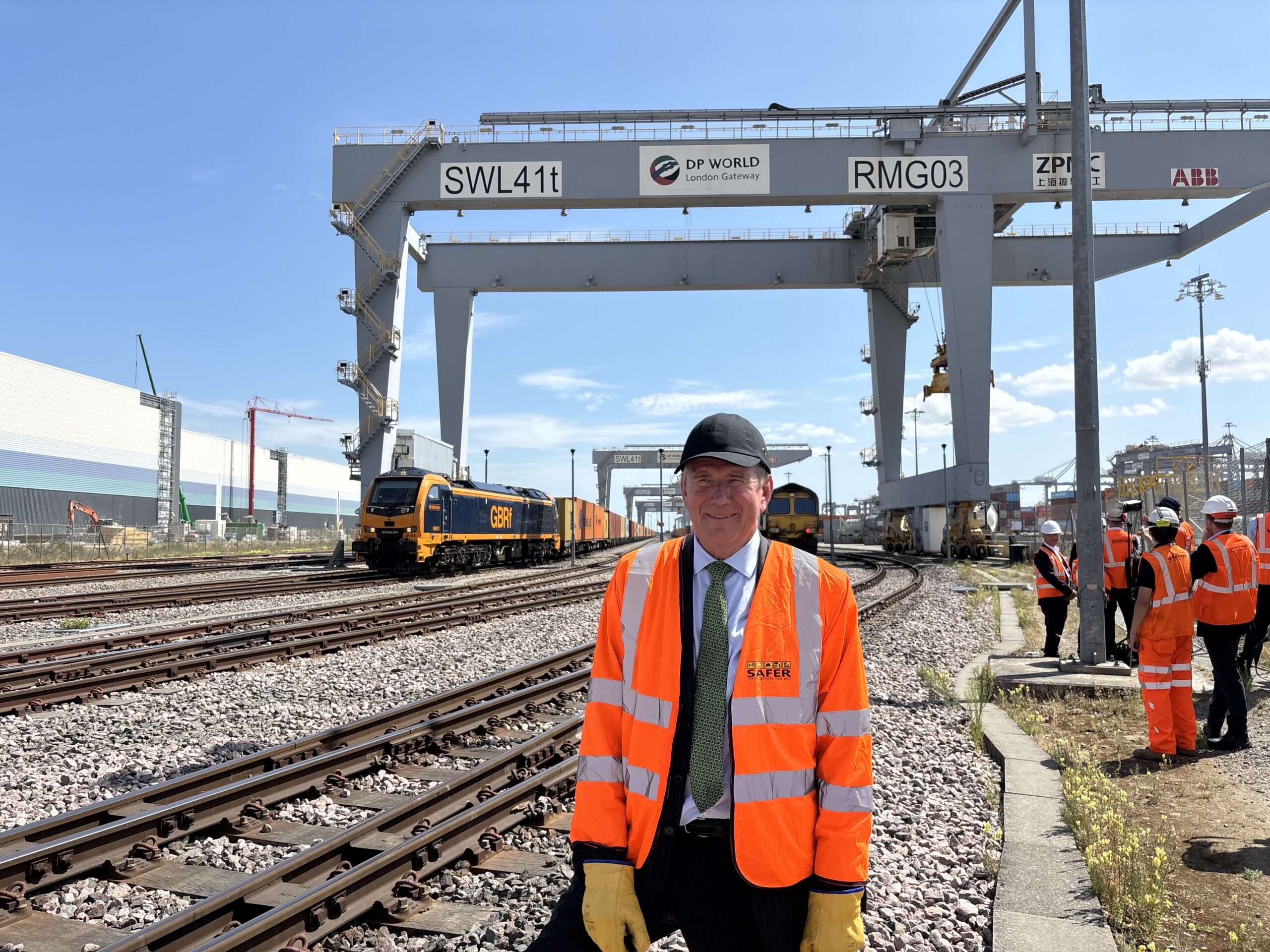
News - July 29, 2026

GB Railfreight (GBRf), the UK’s leading rail freight operator, yesterday operated the first commercial service of the Class 99 hybrid freight locomotive, marking a major milestone in the modernisation and decarbonisation of Britain’s rail freight network.
Yesterday, 99001, the first commercial Class 99 service for Maritime Transport departed DP World London Gateway carrying intermodal freight – goods moved in the same container by multiple modes of transport, such as rail and road – bound for Maritime’s Hams Hall Rail Freight Terminal in the West Midlands.
The new Class 99 locomotives – set to reduce emissions by more than half on a typical journey – are key to unlocking green growth across the rail freight sector, which is worth £2.5b to the national economy and will help meet the Government’s target to grow the sector 75% by 2050. Combining electric operation with the ability to run on non-electrified routes using renewable fuels, the new locomotives are designed to cut carbon emissions without compromising access to any part of the national rail network.
With only around 40% of Britain’s railway currently electrified, the Class 99 offers a practical solution to reducing emissions from Britain’s supply chains without waiting for the rail network to be fully electrified. The faster acceleration of the new locomotives will also help freight trains integrate seamlessly with passenger services, improving the efficient use of the network while supporting economic growth.
Yesterday marks the culmination of more than four and a half years of planning, engineering and testing to bring Britain’s newest and most advanced freight locomotive into service, delivered in partnership with Stadler, Beacon Rail and Network Rail.
John Smith OBE, Chief Executive Officer, GB Railfreight
“Four and a half years ago, we set out to bring a locomotive to the UK that would redefine what rail freight could deliver. Today, with the first commercial Class 99 service departing London Gateway for Hams Hall, we’ve achieved exactly that.
“The Class 99 combines lower emissions, better performance and a modern, safer working environment for our drivers. It’s the result of an incredible effort from teams across GBRf, Beacon Rail and Stadler, and marks the start of a new chapter for rail freight in Britain.”
John Bailey, Managing Director – Intermodal, Maritime Transport
“Following the successful trial in June, it’s great to see the Class 99 now enter commercial service on our London Gateway to Hams Hall route.
“The locomotive can operate under electric power on electrified sections and continue over the rest of the network using renewable fuel, reducing emissions without restricting where services can run. This will be increasingly important as we continue to grow our intermodal offering, moving more freight from road to rail and integrating those services with our expanding eHGV fleet to cut emissions on the essential road journeys at either end.”
Kris Adams, CEO UK Ports and Terminals, DP World
“Rail freight is an important and growing part of our service to customers at London Gateway. Our continuing investment in new rail facilities at our Logistics Hub is enabling more cargo to move to and from our port by train and removing thousands of road miles from UK supply chains.
“The brand new Class 99 hybrid locomotive introduced by GB Railfreight is a technological development that will help us to utilise the full capacity of our rail terminals at London Gateway, carrying more containers, operating more sustainably and generating less noise than older models.”
Ralf Warwel, UK and Ireland Sales Director, Stadler
“The entry into commercial service of the Class 99 marks a major milestone for rail freight in the UK and an important step forward in the decarbonisation of the sector. At Stadler, we are proud to have developed, together with GB Railfreight and Beacon Rail, an innovative locomotive that combines high operational performance with a significant reduction in emissions. The Class 99 demonstrates how technology can accelerate the transition towards more sustainable logistics without compromising the efficiency and flexibility that operators require.”


